
The first year of the PREVENT project — Pollution Reduction and Early-warning for Vulnerable Ecosystem in Adriatic-lonian Territories, funded by the European Commission’s IPA ADRION 419, is done, which means that its partners have delivered crucial data concerning marine pollution and health in general. Since the emphasis was on plastic pollution, the results have shown alarming levels of this type of pollution across all monitored areas.
As part of PREVENT, SeaCras as the project partner co-created the cross-border monitoring system that involved 6 partners, while leveraging all of their resources at disposal for pollution monitoring. In addition to this, during the implementation of the robust and large scale monitoring system for the network of partners vast marine areas were covered.
In particular, the Croatian islands of Mljet and Korčula, the Bay of Kotor in Montenegro, rivermouths in Albania, Rhodos in Greece and several other locations were monitored for a range of pollution, with the main focus on plastic pollution.
Results show alarming concentrations of plastic pollution across these sites, with hotspots threatening both marine ecosystems and coastal communities that depend on them.
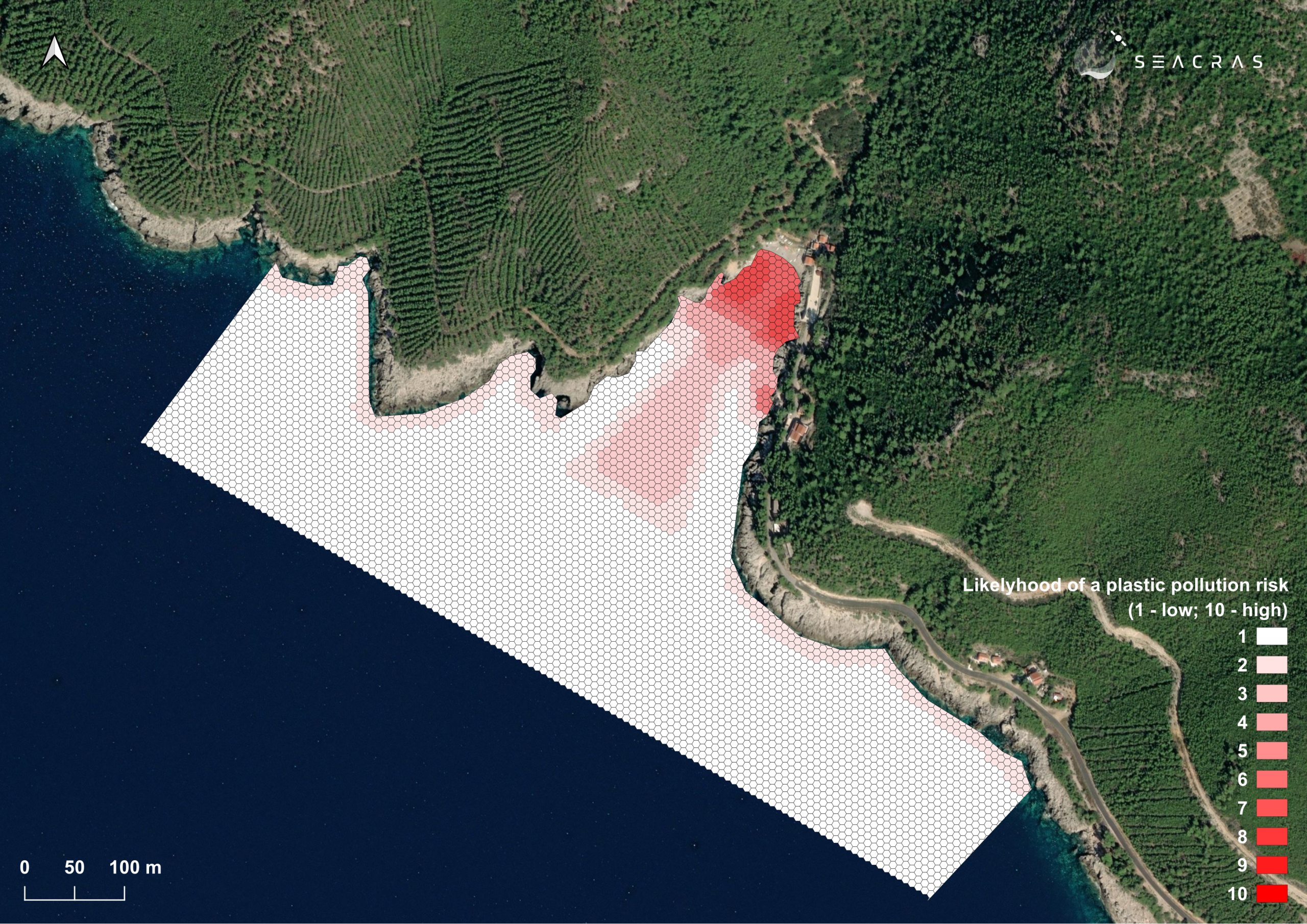
For example, the Pupnatska Luka beach on Korčula island, known as one of the island’s most idyllic beaches was monitored during 2024 and 2025 up to now. Despite its reputation as a paradise, it remains burdened by plastic pollution and marine debris.

Pupnatska Luka, Korčula island
Mljet island, including the Mljet National Park, faced the same challenge. In other words, it suffered from the same fate.
Sutmiholjska Beach, Mljet island
Despite all this, solutions are on the horizon!
The collected results constitute the deliverables and the input for development of Transnational Joint Strategies and protocol that have immediate impact at reducing plastic pollution and safeguarding marine ecosystems through collaborative, cross-border action.
Next phase of PREVENT project has ambitious but obtainable goals which align with EU and global trends:
- Joint Solution: Transnational Marine Litter Management System (JTMLMS)
- Joint Marine Litter Prevention and Management Strategy (JMLPMS)
- Climate Resilient Adriatic-Ionian Action Plan (CRAIAP)
To further stress the importance of this subject, the EU Mission: Restore Ocean and Waters and Global Plastic Action Partnerships are making a huge effort in the midst of the UN General Assembly 2025.
Project partners of PREVENT are the following organisations:
- Sea Cras Ltd., Hrvatska (HR)
- Polytechnic University of Bari, Italia (IT)
- National Institute of Chemistry, Slovenija (SI)
- National Centre for Scientific Research Demokritos, Elláda (EL)
- Development Agency of South Aegean Region –READ S.A., Elláda (EL)
- Municipality of Vlore, Shqipëria (AL)
- Adriatic Training and Research Centre for accidental marine pollution preparedness and response, Hrvatska (HR)
- University of Montenegro, Crna Gora (ME)
- University “St. Kliment Ohridski” Bitola, Severna Makedonija (MK)
- NATIONAL CONFEDERATION OF HANDICRAFTS AND SMALL AND MEDIUM ENTERPRISES TERRITORIAL ASSOC. OF LECCE, Italia (IT)