
SeaCras CEO Mario Špadina, PhD, joined global leaders in Dalian, China, for the World Economic Forum’s Annual Meeting of the New Champions 2026, widely known as Summer Davos.
Held from 23 to 25 June under the theme “Innovating at Scale”, the meeting brought together more than 1,800 leaders from business, government, academia and international organisations across more than 200 sessions, according to the World Economic Forum.
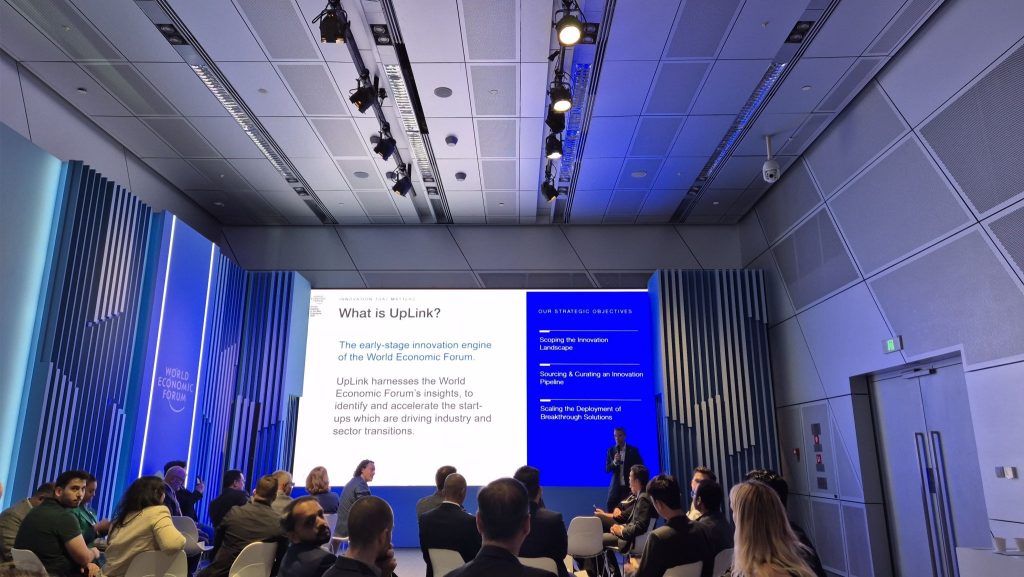
SeaCras participated in a curated program organised by Uplink, World Economic Forum’s early-stage innovation engine. Sessions included Uplink network members and alumni, but also invited representatives of governments, IGOs, NGOs, and companies. The name of the game was to find a way to bridge the gap between existing environmental societal and economical hurdles by Theory of Change.
Dalian was also a particularly relevant setting for SeaCras, being one of China’s major maritime centres, and the visit included several important moments:
- invited visits to the leadership of the city and region of Dalian
- a visit to Dalian Maritime University
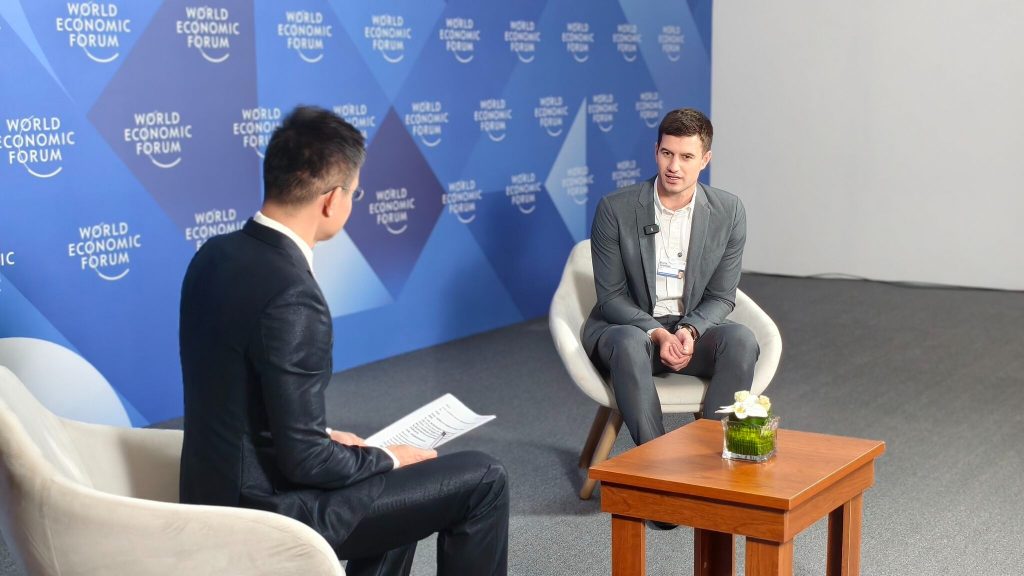
- a national television interview with Mario on bringing oceanographic science closer to business, decision-making, and environmental management
For SeaCras, World Economic Forum’s UpLink network member, the gathering was a valuable opportunity to bring coastal and marine technology into a wider conversation about how innovation moves from promising ideas to practical systems that support economies, communities and the environment.
But before we go into more details about the event, let’s remind you of what Summer Davos is.
AMNC26 and Why Is It Called ‘Summer Davos’
Often described as Summer Davos, the Annual Meeting of the New Champions is the World Economic Forum’s flagship China-based gathering, established in 2007 to spotlight entrepreneurship, innovation, emerging economies and the companies shaping the next generation of global growth. Its name links it to the Forum’s winter meeting in Davos, while reflecting its summer timing and stronger focus on technology, new business models and Asia’s changing economic landscape.
For China, it is an important platform for presenting its economic priorities and engaging with international leaders, while globally it helps frame how developments across China and Asia may influence investment, innovation and growth worldwide. The meeting alternates between Dalian and Tianjin, two major coastal cities that have become integral to its identity: Dalian brings the international outlook of a leading port and innovation hub, while Tianjin reflects the industrial strength and strategic importance of northern China.
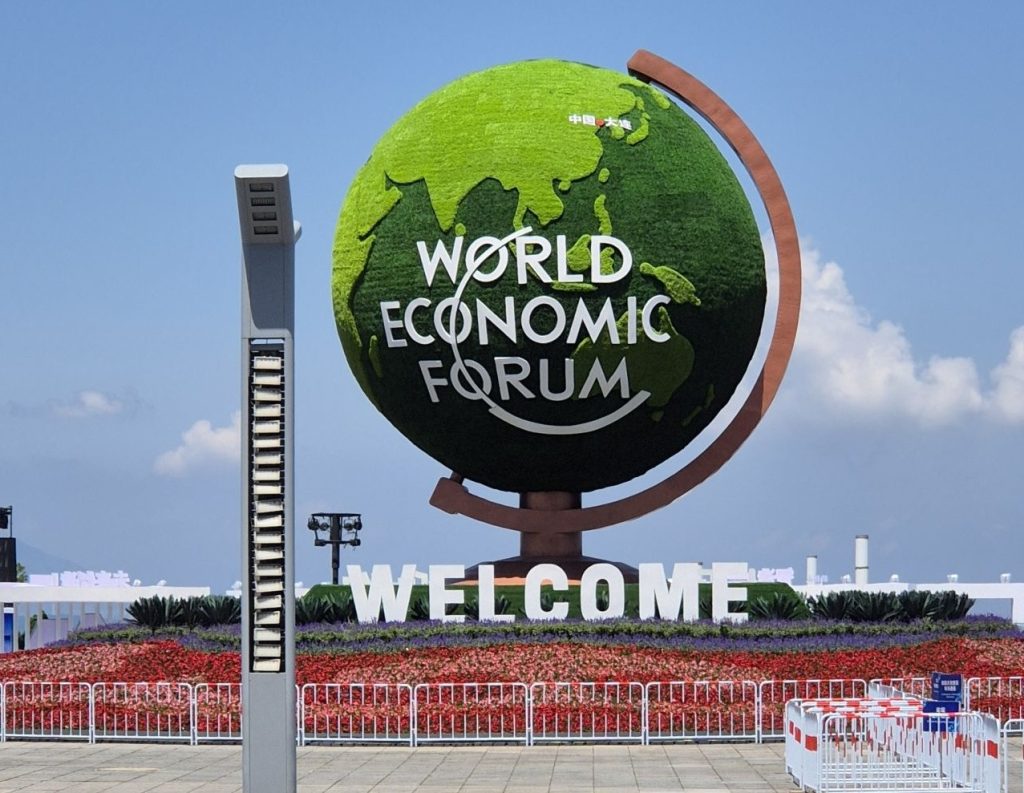
The Annual Meeting of the New Champions has become one of the World Economic Forum’s leading global platforms for science, technology, entrepreneurship and next-generation growth companies. This year’s programme focused on how emerging technologies, shifting markets, advanced manufacturing, AI, energy transition and global competitiveness can shape the next phase of economic progress.
SeaCras’ Active Role at the AMNC26
Our CEO represented SeaCras throughout the event, returning from Dalian with new connections, new perspectives and stronger momentum for the work ahead. As part of the UpLink – World Economic Forum network, Dr. Špadina took an active role in conversations on how technological progress can move from global discussion to practical use, especially in areas where oceanographic science, business, decision-making and environmental management increasingly meet.
Being featured in this year’s UpLink Annual Impact Report as one of only 11 case studies is a strong validation of the direction SeaCras is taking. For us, it confirms that our work in marine and coastal monitoring is creating measurable value and gaining recognition on a global stage.
It also reflects the momentum behind SeaCras: a growing team, stronger technological capabilities and partnerships that are bringing environmental intelligence into real-world monitoring systems. More than a milestone, this recognition reinforces our ambition to make reliable, scalable environmental data a foundation for better decisions worldwide.
As part of the AMNC26 programme, Mario also attended the UpLink Welcome and UpLink Dinner. The visit also included several important moments connected to Dalian’s role as one of China’s major maritime centres, including:
- Invitation to present our company at Dalian District Government Office for the expert delegation
- Invitation to visit Dalian Ocean University
- Our CEO’s interview with China’s television network, discussing how oceanographic science can better support business, decision-making, and environmental management
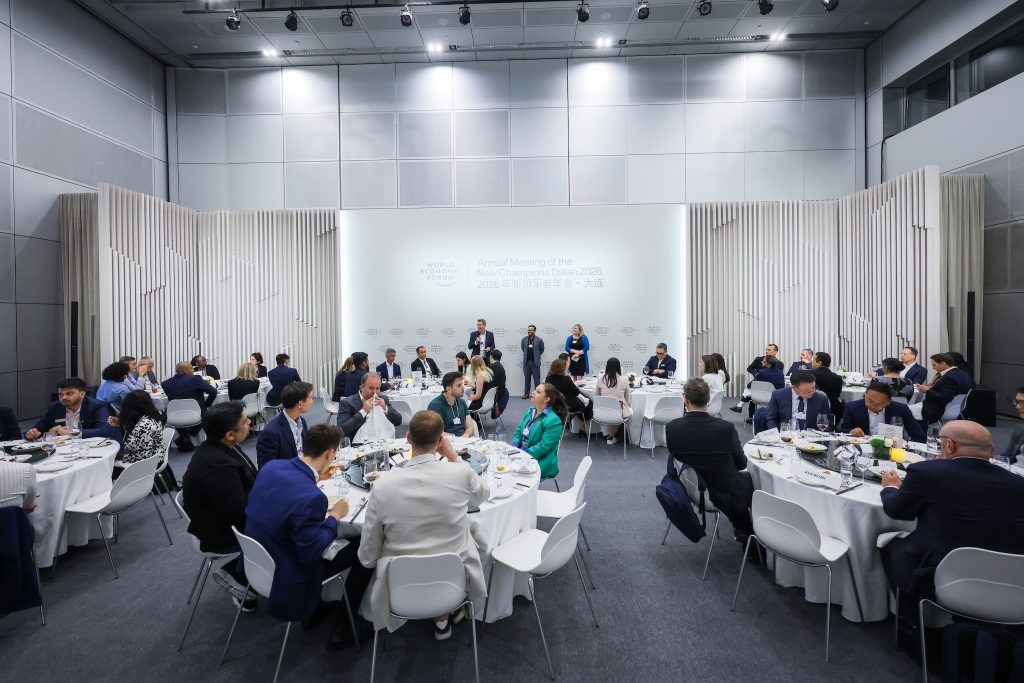
Together, these moments brought oceanographic science closer to the institutions, businesses, and decision-makers shaping one of China’s key maritime regions.
Scaling Innovation for Coastal and Marine Resilience
The theme of this year’s meeting, “Innovating at Scale”, closely reflects the challenge SeaCras works on every day: turning complex environmental data into reliable insight for the people responsible for protecting coastal areas, ports, marine ecosystems and blue economy assets.
From satellite-based monitoring to AI-supported environmental analysis, coastal technology is no longer a niche topic. It is becoming part of how destinations, public institutions and private operators understand risk, measure impact and make better decisions around the sea.
Being present at AMNC26 gave SeaCras the chance to connect its work with a broader global agenda: one where innovation is expected to leave the conference room and prove its value in the real world.
For us, Dalian was not only a meeting point for technology and policy. It was a reminder that the future of coastal resilience will depend on collaboration across sectors, borders and disciplines, and on solutions that can work where they are needed most.