
All news

Our AI-Powered Study Highlights the Environmental Pressure of Nautical Tourism on the Pakleni Islands
SeaCras presented the final results of our Coastal Intelligence study at the VI. meeting of the Pakleni Island Committee in Hvar, where representatives, institutions, and local stakeholders gathered to discuss the growing pressure of nautical tourism on one of...
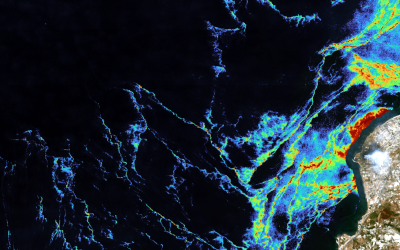
Fuel Spill Detection at Sea: How Seacras’ Coastal Intelligence Helps Improve Marine Pollution Monitoring
Thousands of oil spills have been recorded over the years, releasing large volumes of oil into marine ecosystems and causing lasting damage to biodiversity, fisheries, tourism and coastal economies. While major incidents attract attention, smaller fuel leakages and...

SeaCras Featured in the ‘UpLink Annual Impact Report 2026’
The UpLink Annual Impact Report 2026 is out, and SeaCras is proud to be recognised as one of only 11 featured case studies in the publication, released by the World Economic Forum on 17 March 2026. SeaCras was selected based on its measurable and quantified nature-,...
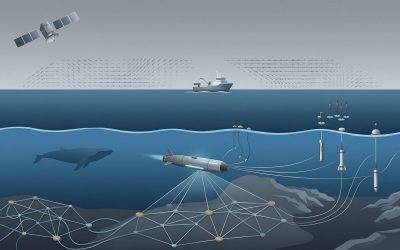
EU’s Joint Research Centre Highlights 8 Priority Technologies for Ocean Observation — with SeaCras at the Forefront of Technological Development
A landmark horizon-scanning report maps the most promising emerging technologies and breakthrough innovations in ocean monitoring, and charts where the scientific community should focus its energy in the years ahead. The EU's Joint Research Centre (JRC) has released...

EU Ocean Days 2026: Where Blue Economy Ambition Met Real Implementation
From investment and innovation to public health and coastal resilience, EU Ocean Days 2026 in Brussels (2–6 March) brought together the institutions, initiatives, and industry players shaping Europe’s next chapter in ocean sustainability. SeaCras was one of key...

How to Make Nautical Tourism More Sustainable: Anchoring, Marine Analytics, and Best Practices
Figure 1. Example outputs of SeaCras’ vessel monitoring analytics in the Badija area. Left: Vessel detection and classification, showing anchored vessels, vessels moored to coastal infrastructure, and vessels in migration, with an inset of vessel-level attributes....

Large-Scale Drina River Pollution Visible From Space!
Island trash in Bosnian Drina accumulates once again. Almost each winter, the Drina River develops a dramatic, floating accumulation of plastic and mixed municipal waste that gets trapped near hydropower infrastructure, most notably by barriers in the Višegrad area in...

EIT Water and the New Adriatic-Ionian Co-Location Centre Kick-off in 2026
The European Institute of Innovation and Technology’s Water and the newly established, regional Adriatic-Ionian Co-Location Centre (CLC South) have officially kicked off! Bringing together policymakers, innovators, researchers, and industry leaders, the event...

Sustainable Development Goals in Action: SeaCras’ Data-Led Approach to Cleaner Water, Resilient Cities, and Healthier Seas
The sustainable development goals (SDGs) are the world’s most widely recognized framework for turning big sustainability ambitions into concrete, measurable action. Adopted as part of the UN’s 2030 Agenda, the SDGs connect environmental protection, resilient...

Extreme Algal Bloom Finally Demystified by Croatian Scientists — Study Published by Springer Nature
The 2024 abnormal algal bloom event marked a significant ecological shift in the Northern Adriatic, reappearing after a 20-year hiatus. The article High-frequency observations during Adriatic mucilage event reveal unique phytoplankton traits and diversity response,...